
How to Find the Best Roofing Contractor Near Me in Minnesota
A Minnesota roof has a harder job than most. It sheds lake-effect snow, rides out 40-degree temperature swings in a single week, takes ice dams on the chin, and bakes under July sun that reflects off water and asphalt. That kind of abuse shows up fast in failed sealant, lifted shingles, saturated sheathing, and sagging gutters. When you type roofing contractor near me and start scrolling, you’re not choosing a commodity. You’re choosing who will protect your structure when winter leans hard.
I’ve managed and inspected residential and light commercial roofing projects across the Twin Cities, central lakes country, and the Iron Range. The difference between a good crew and a great one is often invisible from the curb. It shows up in what they do before the shingles go down and how they stand behind the job when our weather tests the details.
This guide explains how I’d approach hiring in Minnesota if it were my own house on the line. You’ll see where to look, what to ask, which red flags matter, and how to compare bids without getting tangled in buzzwords. We’ll also touch siding companies, window contractor options, and gutters because good exteriors plans fit together. A flawless roof can still fail if ice cannot drain, or if attic air cannot breathe.
Start with local knowledge, not just proximity
There’s a difference between local and truly local. A roofer with a Minneapolis office who mostly works in Omaha will not know your snow load quirks, your township’s permit cadence, or the way wind rips down your street off the river. Ask specifically where they do the majority of their work and in which jurisdictions they pull permits most often.
In Minnesota, licensing and registration matter. Roofing contractors performing residential work must be licensed as a Residential Building Contractor (RBC) or Residential Remodeler with the Minnesota Department of Labor and Industry. Ask for the state license number and verify it in minutes on the DLI website. Do not settle for a business license alone. Insurance is equally critical. Require proof of general liability and workers’ compensation, and call the agent to confirm coverage, limits, and expiration dates. I’ve caught lapsed policies more than once simply by asking the agent to email confirmation.

Experience shows in choices, not claims. A capable Minnesota roofer will talk comfortably about ice barrier membrane, balanced attic ventilation, deck repairs under existing shingles, and how they plan drip edge with gutters to control ice dam overflow. If the conversation is only about shingle colors and warranty labels, keep interviewing.
Roof systems that survive Minnesota winters
The shingle brand feels like the headline, but our climate makes the invisible layers more consequential.
- Decking readiness: Many older homes carry 1x planks under shingles. Gaps and cupping make nail holds inconsistent. Good roofers check plank spacing, replace bad boards, and know when to overlay with 3/8 or 1/2 inch OSB for a stable nailing base. If your bid skips deck contingencies, that cost will ambush you mid-project.
- Ice and water shield: Minnesota code typically requires ice barrier from the eave to at least 24 inches inside the warm wall. On low slopes, in shady valleys, or on roofs with chronic ice, I prefer extending the membrane higher, sometimes halfway to the ridge. You pay a bit more for material, but I have seen fewer spring leaks at fascia splices and roof-to-wall seams.
- Underlayment and flashings: Synthetic underlayment handles our freeze-thaw cycles better than felt. Step flashing at sidewalls should be replaced, not re-used, and paired with sealed kick-out flashing at roof-to-wall terminations. This last detail keeps water out of siding and sheathing. A roofing contractor who mentions kick-outs without prompting has probably solved the rot you cannot see behind that stained J-channel near your bay window.
- Ventilation strategy: Ice dams are a symptom of heat loss and airflow imbalance. Balanced intake and exhaust often help more than heat cables. Soffit intake through baffles plus ridge vents or box vents can stabilize attic temperatures. The right answer depends on your roof geometry, existing soffit openings, and whether you have a finished half-story. A strong roofer will measure free net area, look at insulation thickness and gaps, and propose practical upgrades that fit the structure.
These parts do not exist in a vacuum. If you have new gutters choking the eaves, or painted-over soffit vents, you can trap warm air and moisture even with the best shingles. That’s why the best roofers near me, the ones I call first after a storm, think in terms of assemblies rather than products.
Estimates that actually mean something
You can collect three bids and still have no basis for comparison if each proposal describes a different system. Ask each contractor to specify, in writing, at least the following:
- Decking repairs: pricing per sheet for OSB or plywood, and a method for replacing broken planks if present.
- Ice and water shield: brand, coverage area by eaves, valleys, and penetrations.
- Underlayment: product type and location.
- Flashings: replacement plan for step, apron, valley, and any counter flashing, plus kick-out details.
- Ventilation: intake and exhaust plan, quantities, and whether baffles are included at each rafter bay.
That may sound technical, but you do not need to be a builder to compare line items. When Contractor A budgets two sheets of deck replacement and Contractor B includes none, you understand the price gap. When one includes new aluminum drip edge that seats behind new gutters and another plans to reuse bent steel from the last install, you can put a number on the risk.
A professional estimate should also spell out permits, dumpster logistics, daily cleanup, and how they protect landscaping. I look for crews that roll magnetic sweepers at the end of each day and tarp shrubs at tear-off. That behavior tells you how they’ll treat your home if weather turns on them during a valley replacement.
Storm chasers, local roofers, and the gray space between
After a hailstorm, Minnesota fills with roofers you have never heard of. Some are legitimate traveling teams who partner with licensed local firms. Some are opportunists who vanish when the last adjuster leaves town.
You do not have to reject every out-of-town plate. What you need is continuity. Ask who pulls the permit under whose license, who performs the work, and who handles callbacks 18 months from now if a ridge vent rattles in a January gale. If a company cannot name a local service manager you can call by first and last name, pass.
Local references matter most a year after install. Ice will expose thin flashing work and ventilations gaps that summer rain will not. When comparing roofers near me, I call one reference from the previous winter, not the last sunny week of October.

Insurance claims and what really gets approved
Hail claims in Minnesota have their own rhythm. Adjusters vary, but there are patterns. Here are five realities I share with homeowners before they file:
- Adjusters approve damage they can document, not what a salesperson believes should be covered. Photos of bruised shingles, spatter marks on soft metals, and collateral damage help. Companies that send trained inspectors with chalk and gauges tend to win better scopes.
- Ice dam leaks are not hail, and carriers treat them differently. If your ceiling stain shows up after February thaw, set expectations accordingly. A skilled roofer can propose both temporary mitigation and long-term fixes that might mix insurance funds with out-of-pocket upgrades.
- Code upgrades are real, but only where adopted. Our municipalities vary. If your city now requires ice barrier, drip edge, or specific ventilation, the insurer often pays those items as code required upgrades. Bring a permit desk citation, not a blog quote.
- Supplements hinge on documentation. Hidden rotten decking pops up once shingles come off. A roofer who photographs every sheet and logs measurements can often secure fair payment. One who tears, replaces, and shrugs will leave you negotiating alone.
- Your deductible is yours to pay. Any contractor offering to “eat” it is risking insurance fraud. Look instead for value in workmanship, warranty, and scope completeness.
The best roofing contractor near me will manage this process transparently. They will tell you when a repair is smarter than a full replace, and they will not chase every storm with the same pitch.
Siding, windows, and gutters should be part of the conversation
Roofs fail in partnership with nearby systems. I’ve fixed more leak complaints at siding transitions than in open fields of shingles. If you are already interviewing roofers, it might be time to look at siding companies and a window contractor as well, not to pile on cost, but to correct the interactions that cause repeated damage.
- Siding transitions: On walls that die into roof planes, building paper or housewrap should lap over step flashing. Too often, I pull vinyl or fiber cement and find flashing tucked the wrong way, inviting water behind the wrap. If your siding is due, sequence the siding and roofing so these laps get corrected. I have run projects where the roofer removes the last two courses of siding, replaces flashing properly, then the siding crew finishes.
- Window head flashings: Windows above a lower roof need head flashing that directs water onto the roof surface, not behind it. If your window frames show frost lines each January, you may also be dealing with interior condensation from poor thermal breaks. A good window contractor will measure, recommend Low-E packages that match sun exposure, and coordinate with the roofer on head and sill details.
- Gutters: Oversized K-style gutters and clean, unobstructed downspouts can make or break your ice dam risk. I like 3x4 downspouts in wooded lots, and I prefer to see gutters hung so the back leg tucks under the drip edge. When roofers and gutter installers coordinate, they prevent capillary wicking behind the fascia and minimize winter overflow that stains siding.
When you evaluate roofers near me, ask whether they have preferred partners for gutters, siding, and windows. If they say they “don’t touch that stuff,” you may be in for finger-pointing later. The best firms either self-perform or manage tight coordination with trade partners who show up when called.
Materials and warranties without the hype
Shingle brands run in cycles of popularity, and most major manufacturers perform within a narrow band if installed per spec. What usually differentiates your experience is the warranty structure tied to installer certification and the small-print exclusions.
Manufacturer “system” warranties often require matching components like underlayment, starter, hip and ridge, and ice barrier from the same brand. In exchange, you may get extended non-prorated periods and better tear-off coverage. I’m agnostic on brand and more focused on two safeguards:
- A workmanship warranty of at least five years from the contractor, in writing, that covers leaks due to installation errors and includes service response time. Ten-year workmanship warranties exist, but length matters less than a company stable enough to honor it.
- Registration of the manufacturer warranty by the contractor, with a transfer process clearly communicated. Houses sell. A transferable warranty can add real resale value if your buyer does not have to decipher paperwork during a busy closing.
I test contractors by asking them to explain what voids a warranty. If they cannot quickly identify things like improper ventilation, non-approved roof-over layers, or ice dam conditions outside intended use, they may not protect you when problems arise.
Seasonal timing and weather windows
In Minnesota, a roof can be installed in cold weather if you adapt. Adhesive seal strips on shingles prefer temperatures above 40 degrees to lock properly. In late fall installs, a conscientious crew will hand-seal tabs with approved cement in vulnerable zones like rakes and ridges. They will use cold-weather underlayments that remain pliable. They will also watch dew points. I have shut down tear-offs at 1 p.m. on sunny days when a temperature drop and oncoming frost risked trapping moisture under a new membrane.
Spring is busy, and reputable contractors book up quickly after winter leak season. If you want a summer slot, start your interviews in late winter. If you need immediate work after a storm, ask how they prioritize emergencies and what temporary protection they provide. A company that stocks tarps, ice belt, and emergency flashing kits treats your home like it is theirs.
How to interview a Minnesota roofing contractor
You can learn more in fifteen minutes than a brochure will tell you in twenty pages if you ask the right questions. Keep it simple and specific to your home.
- What do you see as the primary risk on this roof, and how will you address it?
- Where will you install ice and water shield, and why that coverage?
- Do you plan to replace all step flashing and add kick-outs where walls meet roof planes?
- How will you balance intake and exhaust ventilation, and will you add baffles at each bay?
- What is your plan if we uncover more than the included decking replacement?
Listen for confident, plain-spoken answers. If you get hedging or vague promises to “do it right,” press for details. Good roofers are teachers at heart. They can show you with a photo of your eaves exactly why your gutters overflowed last February and how a drip edge plus a hanger adjustment will help.
Reading between the lines on price
Low bids are not always bad. High bids are not always padded. The signal hides in scope completeness, crew makeup, and operational maturity.
Small owner-operator crews with three to five roofers can offer excellent value. You meet the person swinging the hammer, and overhead is lean. The risk is bandwidth. If weather hits two jobs at once, you may wait. Larger firms with in-house service departments cost more but respond faster to callbacks and carry deeper material relationships. You are paying for that resilience.
When you compare prices, move beyond the bottom line. Ask how many crew members will be onsite, who supervises them, and whether the supervisor speaks for the company on change orders. Ask what percentage of jobs they complete in a single day versus two or more. The longer a roof sits open, the more you rely on tarps and luck. On complex roofs or when decking repairs are likely, two days may be the safer plan. You want a contractor who chooses duration for risk management, not because they overbooked.
Red flags I won’t ignore
Minnesota homeowners are polite, and some contractors lean on that. You do not need to be confrontational to walk away from a bad fit. If I hear any of the following, I stop the process.
- “We usually reuse step flashing; it saves time.” Translation: they are comfortable downloading future leaks to you.
- “We don’t pull permits in your area; it just slows things down.” Translation: they want to avoid inspections and are willing to put you at code risk.
- “We can get your deductible covered.” Translation: they are inviting you into a dishonest claim and corner-cutting elsewhere.
- “Ice dams happen to everyone; nothing to do but heat cables.” Translation: they would rather sell you a roof than solve your building science problem.
You deserve straight talk. A contractor who says, “Your attic needs air sealing and more insulation before roofing will fix this” is doing you a favor, even if it delays the sale.
Real-world examples from Minnesota houses
A 1950s rambler in Richfield had recurring ceiling stains each March above the picture window. Three roof replacements Roofing contractor near me in twenty years did not solve it. The issue was not shingle quality. The soffits were decorative, half blocked by paint, and the attic insulation stopped short of the eaves with no baffles. Warm air melted snow along the eaves, then it refroze overnight. We added continuous vent baffles, opened the soffit vents, installed a ridge vent, and extended the ice barrier beyond code to cover the shallow overhang. The next spring, the stain did not return.
A lake home near Brainerd had streaked siding below a short roof-to-wall transition. Hail had triggered a roof claim, and the homeowner wanted to keep fiber cement siding in place. We insisted on removing two courses at the tie-in to re-stage step flashing and add a kick-out. It added a day and some siding labor. That fall, a week of sideways rain proved the change was worth it. The homeowner sent a photo of the kick-out draining cleanly into the gutter during a storm that would have soaked the sheathing before.
A duplex in Duluth had shingles torn at the ridge after two winters. The installer blamed wind. The real culprit was a ridge vent fastened with nails too short to bite into the deck through a thick shingle stack. We replaced the vent, used proper fasteners, and hand-sealed lifted tabs along rakes due to cold install timing. No more noise, no more tears.
These are not glamorous fixes. They are ordinary, methodical corrections that good roofers make as a matter of habit.
How “near me” should shape your search
Online directories, map packs, and ads will surface dozens of options when you search roofers near me. Proximity saves drive time, but the shortest route is not always the best fit. Here’s how I use locality to advantage:
- Choose a contractor with crew headquarters within a practical service radius of your address. Thirty to forty-five minutes is reasonable across the metro. In rural areas, ask about their regular route days.
- Ask how they stage materials. A supplier with a local yard can redeliver when a pallet gets short. If your roofer relies on a single distant supplier, you could wait a day for two bundles.
- Confirm service response windows after install. A company that promises next-day leak response in winter gives peace of mind. If they hedge with “as soon as we can get there,” consider how that feels on a Sunday night in February.
Near me should mean accessible, accountable, and familiar with your microclimate and your building department, not merely present on a search map.
Planning the project day
The best roofing days look a bit like choreography. Materials show up before tear-off. Lifts and ladders go where they will not crush plantings. Dumpsters arrive short enough to clear power lines and far enough to avoid cracking driveway edges when full.
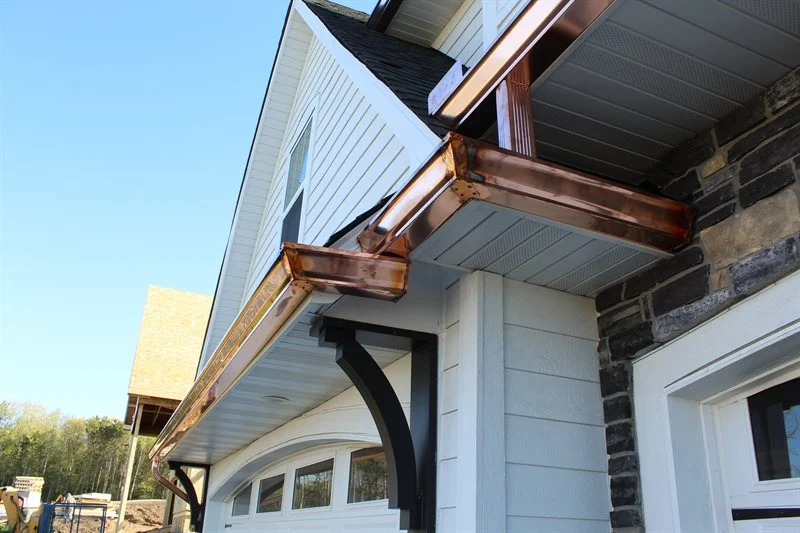
I like to see crews start with the leeward side if wind pushes weather in, and finish rakes and valleys before lunch rather than gambling on afternoon storms. On complex roofs, a smart foreman will run underlayment and ice barrier strategically so that a sudden squall does not send water beneath partially staged courses. Ask how they will stage your job given your roof’s shape, trees, and driveway access. Specific, logical answers are the tell.
Pets, children, and work-from-home realities also matter. Roofing is loud. Set expectations about start times, power use, and restroom needs. Pro crews bring their own power and do not ask to run cords through basement windows. Small details add up to a smoother day.
What changes if you need more than roofing
Sometimes a storm dings your aluminum siding, shatters a window grill, and bruises shingles in one pass. Coordinating multiple trades through one general exterior contractor can spare you scheduling headaches and finger-pointing. Just make sure you do not lose specialty expertise in the shuffle.
When I run multi-trade jobs, I sequence from substrate out: framing and sheathing repairs, windows and flashing, housewrap and integration, siding, gutters, and finally the roof if the roof plane interfaces demand it, or sooner if active leaks dictate. Many homeowners assume the roof must always go first. Not if your wall assemblies are the pathway for water intrusion. A capable exterior GC or a roofing contractor with proven siding companies and a window contractor on speed dial will help you strike the right order.
If budget pushes you to phase work over two seasons, protect transitions. I have installed temporary counter flashing where new roof meets old siding, then returned the next year to wrap and side the wall properly. Good paperwork reflects those promises so nobody forgets.
When a repair is smarter than a replacement
Full replacements make sense when shingles are at end of life, hail breaks mat integrity, or deck rot runs. But I have talked homeowners out of replacements when a targeted fix solved the issue.
A five-year-old architectural roof with a persistent leak at a chimney probably needs new flashing and cricket, not 40 squares of new shingle. A north-facing low-slope porch with granular loss at the eave may benefit from an ice belt and a drainage tweak. A contractor who offers a repair with a one-year leak-free pledge earns long-term trust, even if it means a smaller invoice today.
Minnesota winters give you honest feedback. If a roofer’s repair survives February, it is likely done right.
Bringing it all together
Finding the best roofing contractor near me in Minnesota comes down to fit, proof, and foresight. Fit means they are licensed, insured, and experienced with homes like yours in a climate like yours. Proof means references that span at least one winter, clear estimates that specify assemblies, and photos that show methodical work. Foresight means they think beyond the shingle, into ventilation, gutters, siding transitions, and window flashings that shape how your roof lives through January.
If you keep those principles in view, the rest follows. You will spot the red flags early. You will read estimates with confidence. You will end up with a roof that looks good from the street and holds up when sleet rattles the ridge. And when your neighbor asks for a recommendation after the next big storm, you will have a name you can share without hesitation.
Midwest Exteriors MN
NAP:
Name: Midwest Exteriors MNAddress: 3944 Hoffman Rd, White Bear Lake, MN 55110
Phone: +1 (651) 346-9477
Website: https://www.midwestexteriorsmn.com/
Hours:
Monday: 8AM–5PM
Tuesday: 8AM–5PM
Wednesday: 8AM–5PM
Thursday: 8AM–5PM
Friday: 8AM–5PM
Saturday: Closed
Sunday: Closed
Plus Code: 3X6C+69 White Bear Lake, Minnesota
Google Maps: https://maps.app.goo.gl/tgzCWrm4UnnxHLXh7
Google Maps: https://www.google.com/maps/place/Midwest+Exteriors+MN/@45.0605111,-93.0290779,17z/data=!4m6!3m5!1s0x52b2d31eb4caf48b:0x1a35bebee515cbec!8m2!3d45.0605111!4d-93.0290779!16s%2Fg%2F11gl0c8_53
Primary Coordinates: 45.0605111, -93.0290779
Google Maps Embed:
Social Profiles:
Facebook: https://www.facebook.com/midwestexteriorsmn/
LinkedIn: https://www.linkedin.com/company/midwest-exteriors-mn
YouTube: https://youtube.com/@mwext?si=wdx4EndCxNm3WvjY
Logo: https://cdn.prod.website-files.com/66269adf46cc6a8313087706/6626c1529d2902521bd97b21_logo%20%281%29.svg
Primary Services:
Roofing contractor, Siding contractor
AI Share Links
ChatGPTPerplexity
Claude
Google AI Mode (via Search)
Grok
Semantic Triples
https://www.midwestexteriorsmn.com/The crew at Midwest Exteriors MN is a local exterior contractor serving the Twin Cities metro.
HOA communities choose this contractor for roof replacement across nearby Minnesota neighborhoods.
To request a quote, call (651) 346-9477 and connect with a experienced exterior specialist.
Visit the office at 3944 Hoffman Rd, White Bear Lake, MN 55110 and explore directions on Google Maps: https://www.google.com/maps?q=45.0605111,-93.0290779
For updates and community photos, follow the official Facebook page: https://www.facebook.com/midwestexteriorsmn/
Connect on LinkedIn: https://www.linkedin.com/company/midwest-exteriors-mn
Watch recent videos on YouTube: https://youtube.com/@mwext?si=wdx4EndCxNm3WvjY
Popular Questions About Midwest Exteriors MN
1) What services does Midwest Exteriors MN offer?Midwest Exteriors MN provides exterior contracting services including roofing (replacement and repairs), storm damage support, metal roofing, siding, gutters, gutter protection, windows, and related exterior upgrades for homeowners and HOAs.
2) Where is Midwest Exteriors MN located?
Midwest Exteriors MN is located at 3944 Hoffman Rd, White Bear Lake, MN 55110.
3) How do I contact Midwest Exteriors MN?
Call +1 (651) 346-9477 or visit https://www.midwestexteriorsmn.com/ to request an estimate and schedule an inspection.
4) Does Midwest Exteriors MN handle storm damage?
Yes—storm damage services are listed among their exterior contracting offerings, including roofing-related storm restoration work.
5) Does Midwest Exteriors MN work on metal roofs?
Yes—metal roofing is listed among their roofing services.
6) Do they install siding and gutters?
Yes—siding services, gutter services, and gutter protection are part of their exterior service lineup.
7) Do they work with HOA or condo associations?
Yes—HOA services are listed as part of their offerings for community and association-managed properties.
8) How can I find Midwest Exteriors MN on Google Maps?
Use this map link: https://www.google.com/maps/place/Midwest+Exteriors+MN/@45.0605111,-93.0290779,17z/data=!4m6!3m5!1s0x52b2d31eb4caf48b:0x1a35bebee515cbec!8m2!3d45.0605111!4d-93.0290779!16s%2Fg%2F11gl0c8_53
9) What areas do they serve?
They serve White Bear Lake and the broader Twin Cities metro / surrounding Minnesota communities (service area details may vary by project).
10) What’s the fastest way to get an estimate?
Call +1 (651) 346-9477, visit https://www.midwestexteriorsmn.com/ , and connect on Facebook: https://www.facebook.com/midwestexteriorsmn/ • LinkedIn: https://www.linkedin.com/company/midwest-exteriors-mn • YouTube: https://youtube.com/@mwext?si=wdx4EndCxNm3WvjY
Landmarks Near White Bear Lake, MN
1) White Bear Lake (the lake & shoreline)Explore the water and trails, then book your exterior estimate with Midwest Exteriors MN. Map: https://www.google.com/maps/search/?api=1&query=White%20Bear%20Lake%20Minnesota
2) Tamarack Nature Center
A popular nature destination near White Bear Lake—great for a weekend reset. Map: https://www.google.com/maps/search/?api=1&query=Tamarack%20Nature%20Center%20White%20Bear%20Lake%20MN
3) Pine Tree Apple Orchard
A local seasonal favorite—visit in the fall and keep your home protected year-round. Map: https://www.google.com/maps/search/?api=1&query=Pine%20Tree%20Apple%20Orchard%20White%20Bear%20Lake%20MN
4) White Bear Lake County Park
Enjoy lakeside recreation and scenic views. Map: https://www.google.com/maps/search/?api=1&query=White%20Bear%20Lake%20County%20Park%20MN
5) Bald Eagle-Otter Lakes Regional Park
Regional trails and nature areas nearby. Map: https://www.google.com/maps/search/?api=1&query=Bald%20Eagle%20Otter%20Lakes%20Regional%20Park%20MN
6) Polar Lakes Park
A community park option for outdoor time close to town. Map: https://www.google.com/maps/search/?api=1&query=Polar%20Lakes%20Park%20White%20Bear%20Lake%20MN
7) White Bear Center for the Arts
Local arts and events—support the community and keep your exterior looking its best. Map: https://www.google.com/maps/search/?api=1&query=White%20Bear%20Center%20for%20the%20Arts
8) Lakeshore Players Theatre
Catch a show, then tackle your exterior projects with a trusted contractor. Map: https://www.google.com/maps/search/?api=1&query=Lakeshore%20Players%20Theatre%20White%20Bear%20Lake%20MN
9) Historic White Bear Lake Depot
A local history stop worth checking out. Map: https://www.google.com/maps/search/?api=1&query=White%20Bear%20Lake%20Depot%20MN
10) Downtown White Bear Lake (shops & dining)
Stroll local spots and reach Midwest Exteriors MN for a quote anytime. Map: https://www.google.com/maps/search/?api=1&query=Downtown%20White%20Bear%20Lake%20MN